The bill that won’t pass – and won’t go away.
Every few years, Congress reintroduces the same bill to “fix” the Americans with Disabilities Act (ADA). The bill goes by different names depending on the decade, but the mechanism is always the same: Before a person with a disability can take legal action over an accessibility violation, they must first send written notice and then wait – 90 days, 120 days, 180 days depending on which version you’re reading – while the business decides whether it feels like doing anything about it.
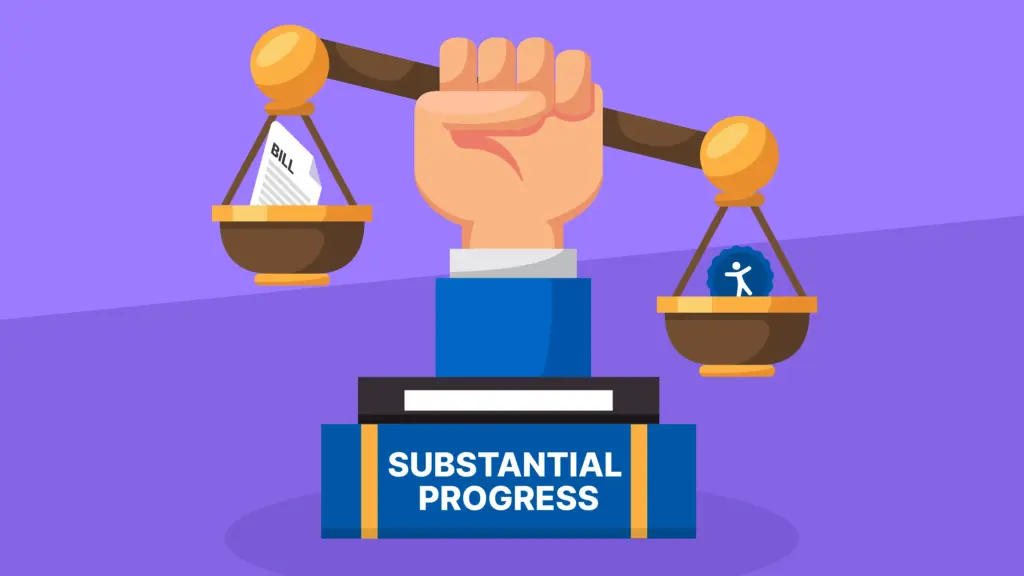
The latest version is H.R. 8396, the ADA Compliance for Customer Entry to Stores and Sites (ACCESS) Act of 2026. Introduced in April by Representative Ken Calvert of California, it requires written notice of a violation, 60 days for the business to respond with a description of planned improvements, and another 60 days to make them – or demonstrate “substantial progress.” 120 days total before a disabled person can pursue enforcement of a right they have technically held since 1990.
That might sound reasonable, if you don’t look too closely. But what bills like this actually do is redefine when the obligation to be accessible begins: only when a person with disabilities complains about it.
A 25-year campaign
Most news coverage is treating the ACCESS Act like a recent phenomenon. It isn’t. The Congressional Research Service (CRS) documented that notice-and-cure legislation has been introduced in Congress since the 106th Congress – which met from 1999 to 2001. That is not a typo.
The early versions came and went quietly. Bills in the 107th, 108th, 109th, 110th, and 111th Congresses, all variations on the same theme, all dying without ceremony. The 108th Congress version, H.R. 728 in 2003, at least got a subcommittee hearing. Most didn’t even get that. By 2011, we were on H.R. 881, the ADA Notification Act, requiring 90 days’ notice before any civil action could take place, with courts empowered to extend that by another 30 days if the business asked nicely.
None of this deterred anyone.
The one that almost made it
In 2017, the bill was re-framed and given a new name: the ADA Education and Reform Act, H.R. 620. The mechanism shifted slightly – 60 days for a business to acknowledge receipt and describe planned changes, then 120 more days to act on them. A total waiting period of a whopping 180 days.
It passed the House on February 15, 2018, by 225 votes to 192. Mostly along party lines – 213 Republicans in favor, 173 Democrats against. Twelve Democrats crossed over in support. Nineteen Republicans voted no.
The opposition was not quiet. Two hundred and thirty-six disability rights organizations joined a letter opposing the bill, including the American Foundation for the Blind, the Christopher and Dana Reeve Foundation, the National Council on Independent Living, and the Paralyzed Veterans of America. Representative Jim Langevin – the first quadriplegic person elected to Congress – said plainly: “Businesses should not be encouraged to ignore the law until someone complains, which is exactly what this legislation does.”
The Leadership Conference on Civil and Human Rights called it what it was: a bill that would remove incentives for businesses to comply with the law unless and until people with disabilities were denied access, leading to their continued exclusion from the mainstream of society.
It died in the Senate.
The name “Education and Reform Act” had become, shall we say, strongly associated with a particular political fight. So in 2019, the bill came back with a new acronym: the ACCESS Act.
Same bill, new hat
The ADA Compliance for Customer Entry to Stores and Services Act arrived in 2019 as H.R. 4099. The same 60+60 structure with the same “substantial progress” language and the same objections. It didn’t pass. Noticing a pattern?
It came back in 2021 as H.R. 77, introduced on the fourth day of the new Congress. It didn’t pass. It came back in 2023 as H.R. 241, this time with a small addition: a requirement for the DOJ to study whether web content accessibility standards provide reasonable accommodations under the ADA. Digital accessibility was edging into the frame. It didn’t pass.
Here’s what that lineage looks like:
| Bill | Year | Wait period | Covers digital? |
| H.R. 728 | 2003 | 90 days | No |
| H.R. 881 | 2011 | 90 days | No |
| H.R. 620 | 2017 | 180 days | No |
| H.R. 4099 | 2019 | 120 days | No |
| H.R. 77 | 2021 | 120 days | No |
| H.R. 241 | 2023 | 120 days | Barely |
| H.R. 8396 | 2026 | 120 days | Yes, explicitly |
The 2026 version (H.R. 8396) is meaningfully different from its predecessors in one respect: It explicitly covers websites, mobile apps, online forms, checkout flows, kiosks, and other digital technologies. That is a significant expansion of scope, and it matters because digital access in 2026 isn’t a niche concern. For many businesses, the website is the front door.
The “substantial progress” language, however, remains unchanged. As Karl Groves observed when the bill dropped:
A wheelchair user cannot enter a restaurant through substantial progress. A blind person cannot complete a purchase through substantial progress. Progress is not the same thing as access.
A judicial landscape that hasn’t finished settling
While Congress has been filing the same bill on a loop, the courts have been wrestling with their own unresolved questions – and the answers matter for understanding why the ACCESS Act keeps coming back.
In 2019, the Ninth Circuit ruled that the ADA applies to Domino’s website and app. Domino’s appealed to the Supreme Court. The Court declined to even hear the case, leaving the Ninth Circuit’s ruling intact.
Then came Acheson Hotels v. Laufer, decided December 5, 2023, and the contrast is instructive.
Deborah Laufer was a self-described ADA tester – a disabled woman who systematically reviewed hotel websites for compliance with the ADA’s Reservation Rule, which requires hotels to disclose accessibility information so that people with disabilities can determine whether a property will meet their needs. She sued hundreds of non-compliant hotels, including one in Maine she had no intention of visiting. The question the Supreme Court wanted to answer: Does a tester have standing to sue under the ADA when they have no plans to use the business?
They granted certiorari. They heard oral arguments. They knew the case was likely moot by then – Laufer had moved to dismiss after one of her attorneys was sanctioned for misconduct in related cases, repeatedly demanding standard fee amounts after filing boilerplate complaints – and they held oral arguments anyway, because they wanted to talk about it. The circuit courts had split six ways. The implications for ADA enforcement were significant.
Then the majority took the mootness exit. The case was dismissed without a ruling on standing. Justice Thomas concurred but wrote separately to say he would have found Laufer lacked standing entirely. Justice Jackson concurred but disagreed with vacating the lower court’s judgment. The standing question – who can enforce the ADA, under what circumstances, with what intent – remains unresolved. The circuit split is still live.
This is the judicial backdrop against which the 2026 ACCESS Act arrives. The courts haven’t finished answering the foundational questions about digital accessibility enforcement. Rather than waiting for that landscape to settle, or taking steps to help it resolve, Congress is proposing to add a procedural barrier on top of an already uncertain foundation.
States are taking matters into their own hands
Meanwhile, states have been finding targeted ways to address the genuine problem of abusive litigation – without requiring disabled people to wait 120 days to enforce their civil rights.
California is a prime complicated case. The state’s serial litigation problem is largely a function of the Unruh Civil Rights Act, which makes any ADA violation an automatic Unruh violation carrying $4,000 in statutory damages per encounter (remember this is a state law provision, not a federal one). A plaintiff could claim an initial encounter plus deterrence damages and be looking at $8,000 per case before attorney’s fees. California’s Civil Code § 55.56 allows defendants to reduce those damages by fixing physical barriers, and high-frequency litigant filing fees pushed the most prolific filers out of federal court. When the San Francisco and Los Angeles District Attorneys jointly sued the Potter Handy law firm in 2022, alleging that many of its ADA cases were fraudulent, federal filings in the district dropped dramatically. These are real interventions, but they’re specific to California’s legal landscape and mostly address physical barriers. They don’t map neatly onto digital accessibility, which is what the 2026 bill is primarily targeting.
Kansas took a different approach in 2023. The Kansas Act Against Abusive Website Access Litigation allows businesses to sue abusive plaintiffs and their counsel for fees and damages, applies a five-factor totality-of-circumstances test to distinguish legitimate claims from bad-faith ones, and sunsets automatically if the DOJ issues web accessibility regulations. It’s targeted, proportionate, and self-limiting by design.
In April 2026, Missouri’s General Assembly unanimously passed Senate Bill 907, the Act Against Abusive Website or Web Content Access Litigation. Unanimously. It specifically addresses abusive digital accessibility litigation and passed without the partisan warfare that has followed every federal ACCESS Act attempt.
The pattern is worth noting. When legislation targets the actual bad actors – the attorneys, the incentive structures, the bad faith filings – it tends to find broader support. When it burdens the disabled person seeking access, it tends to find 236 organizations writing letters against it.
So why does this keep coming back?
There is a genuine structural problem underneath all of this, and it deserves an honest acknowledgment. Title III of the ADA does not allow private plaintiffs to recover compensatory damages – only injunctive relief. The legal goal is access, not financial recovery.
But attorney’s fees are available to prevailing parties. That means attorneys, not their clients with disabilities, are often the primary financial beneficiaries of ADA litigation. A business that fixes a violation before being sued eliminates the fee opportunity entirely, which is why some attorneys file immediately rather than reaching out first. The economics push toward litigation, not dialogue.
That deserves a real solution.
What it doesn’t deserve is a federal bill that responds to bad attorneys by making life harder for people with disabilities, who did not design the fee structure, did not ask to be made the enforcement mechanism for a civil rights law, and did not choose to live in a country where, 35 years after the ADA’s passage, a significant portion of websites and physical spaces remain inaccessible.
The Laufer case illustrated the problem in miniature: a legitimate access issue, a plaintiff whose own attorney was exploiting the fee structure, a case that collapsed before the Court could say anything useful, and a legal landscape left no clearer than before. The ACCESS Act’s answer to all of that is: Make the disabled person wait longer.
If the problem is unethical attorneys, address unethical attorneys. If the problem is abusive demand letters, regulate demand letters. If the problem is bad-faith high-volume filings, sanction bad-faith high-volume filings. Kansas and Missouri have both demonstrated this is entirely possible.
A pattern, not a persistence
Twenty-five years. At least ten bills. Multiple names, multiple Congresses, one basic mechanism. The objections from the disability community have been consistent every single time. The bill has never become law.
At some point, the question stops being “will this pass?” and starts being “what is this actually for?” The history suggests that each iteration resets the conversation, gives the legislation’s supporters something to point to, and maintains pressure on the ADA’s enforcement mechanism without ever quite having to defend its record of failure.
The ACCESS Act of 2026 is not a new idea wearing new clothes. It is the same idea, filed again, with a broader scope and the same foundational problem at its core: It treats the obligation to be accessible as something that begins when a disabled person complains about it, rather than something that has been the law since 1990.
The courts haven’t finished settling the questions. The states are finding better answers. And Congress is introducing the same bill for the fourth time under the same name and calling it progress.
The exits are clearly marked. They always have been.
The question is why we keep pretending they aren’t.