Courts are starting to distinguish between real accessibility work and quick fixes, meaning legal risk depends on whether you can show ongoing effort and not just intent. Document what you’re doing, fix what you can, and make yourself a bad target.
Two recent U.S. cases tell a very clear story about digital accessibility: Courts are increasingly looking at whether you can prove you’re doing the work.
This is good news, because it’s not about edge cases or technical interpretations of WCAG versions or anything like that.
It’s something much simpler, and simple is good.
I’m an accessibility nerd and I’ll give you my take on these cases and what they mean here. If you want to see the procedural detail on both rulings, Ken Nakata’s March 2026 Legal Update at Converge Accessibility is the best single resource.
Case 1: Jones v. Moscot.com
A blind plaintiff brought a fairly standard ADA Title III claim against Moscot, the New York eyewear company, alleging barriers on their website: missing alternative text, unannounced pop-ups, elements that only worked with a mouse, and broken links. He said those barriers prevented him from completing a purchase.
There’s nothing unusual about that. Cases like this have been filed for years.
What’s unusual is how this one ended.
Moscot didn’t argue that accessibility didn’t matter. They didn’t try to dismiss the importance of the issues raised, and they didn’t claim their site was perfect.
Instead, they showed their work.
They presented evidence that they had engaged a qualified accessibility firm – Level Access – not in response to the lawsuit, but since May 2023, before the complaint was ever filed. They documented audits, they demonstrated that issues had been identified and remediated, and crucially they showed it wasn’t an attempt at a one-off fix – it was an ongoing program, with a documented process that makes the question “are you doing the work?” easy to answer.
In response, the plaintiff offered no evidence to dispute what Moscot had presented.
The court responded:
“Jones fails to rebut the evidence establishing that Moscot has remediated accessibility violations in its website. Indeed, [he] does not offer any declarations or exhibits in response to the Aktan Declaration or the accompanying Level Access report.”
Accessibility matters and issues existed, but the court no longer saw a need to intervene on the grounds that the work was documented, ongoing, and unrebutted.
Case dismissed.
Case 2: Parikh v. accessiBe
The Parikh v. accessiBe case looks very different on the surface, but it reinforces the same underlying point from the other direction.
Here, the plaintiffs are businesses, not users with disabilities. And instead of suing a website for being inaccessible, they’re suing their accessibility vendor for selling them something that didn’t work.
The case started with a single plaintiff – Tribeca Skin Center, a medical practice in New York – and grew as others with identical experiences joined via amended complaints. By the time the most recent ruling landed in March 2026, three small businesses were named: Tribeca Skin Center, Dillon Music, and Safe Life Defense. Each had the same story.
They bought accessiBe’s accessWidget. They were told it would make their sites fully WCAG 2.1 AA compliant within 48 hours. They were told it would protect them from ADA lawsuits. They were sold a Litigation Support Package that promised legal backup if a lawsuit came anyway.
Then they got sued for having inaccessible websites.
They contacted accessiBe for the promised legal support.
What they received was an audit report claiming their sites were compliant, a claim that the lawsuit was therefore invalid, and a referral to outside counsel – at their own expense.
This matters more than it might seem, because accessiBe wasn’t operating in a vacuum when this case went to court. In April 2025, the FTC had already settled with the company: a $1 million penalty and an agreement to stop claiming its widget could make any website WCAG-compliant. The court in Parikh took judicial notice of that settlement, even while noting it wouldn’t be determinative at this stage.
The March 2026 ruling dismissed most claims, but let the most important one survive: that accessiBe misrepresented what its product could actually do.
AccessiBe had argued its terms of service protected it, disclaiming all warranties and capping damages at six months of subscription fees or fifty dollars, whichever was greater. The court found that the cap effectively limited plaintiffs to nominal damages, which triggered a public policy exception under New York law: you cannot contractually insulate yourself from your own gross negligence.
The case is still ongoing, but its direction is clear.
The elephant that’s already in the room
Something worth understanding before we get to what these cases mean together:
The litigation landscape these cases sit in is not static. For years, the dominant model for digital accessibility enforcement in the Title III space has been the serial plaintiff – individuals, often represented by a small number of specialist law firms, who systematically test websites for WCAG failures detectable by automated crawl and file near-identical complaints at volume. Clay Lee Jones, the plaintiff in the Moscot case, fits that pattern. His complaint against Moscot was one of multiple nearly identical filings in the same period.
This isn’t necessarily cynical. Private enforcement has always been the mechanism the ADA relies on for Title III, because the Department of Justice doesn’t have the resources – or currently, the appetite – to chase thousands of inaccessible retail websites. Serial plaintiffs create pressure that produces change. That pressure matters. But it’s also a volume operation, and volume operations depend on easy targets.
The Supreme Court noticed.
In Acheson Hotels v. Laufer (2023), the Court took up the question of whether a “tester” plaintiff – someone who systematically searches for ADA violations with no intention of actually using the service – has standing to sue at all. Deborah Laufer had filed hundreds of hotel accessibility cases across the country. The circuit courts were split on whether she had standing to do it. The Supreme Court took the case to resolve that split.
Before they could rule, Laufer’s attorney was suspended for filing inaccurate fee requests. She dropped her cases. The Court dismissed as moot.
But not before saying something worth paying attention to:
“We emphasize,” Justice Barrett wrote for the majority, “that we might exercise our discretion differently in a future case.”
That’s a pretty big signal.
Justice Thomas went further, using his concurrence to address the standing question anyway – on a moot case – because he felt it mattered enough. His conclusion: Tester plaintiffs aren’t asserting a violation of their own rights. They lack standing.
The question remains formally unresolved. But courts, especially in New York, are already asking harder questions, requiring more specific allegations and scrutinising intent to return. They’re making serial, volume-based litigation more expensive and less reliable.
Which brings us to the question I raised in a webinar in March 2026, and in presentations going back to CSUN in March 2024: What happens when one enforcement path gets harder?
You look for the easier one.
People with disabilities who genuinely cannot access government services, employment systems, healthcare portals, or educational institutions have standing that is very difficult to challenge. They needed the service and they were denied it. The harm is concrete, the need is real, and the question “why are you here?” answers itself.
Title II. Title I. Section 504. The same legal question – does the court need to intervene? – with far less room to argue the plaintiff had no genuine interest.
Documentation doesn’t just help you in the current litigation environment. It positions you for the one that’s coming.
(The legal architecture behind this — all five frameworks, why the floor never moved — is in The ADA Deadline Doesn’t Matter. Here’s What Does.)
The part where I say “told you so” (politely)
In a webinar on March 26, 2026, I said this:
The real solution here is actually kind of simple. It’s make yourself a bad target.
When you have an ADA case, the plaintiff is essentially asking for court intervention, and they have to show that the intervention is necessary.
So if you can demonstrate with documentation, with evidence, with a real plan that you already know your issues and you’re actively fixing them, that argument becomes so much harder to make.
That wasn’t a prediction about these specific cases. The Moscot ruling had landed three weeks earlier. The Parikh ruling came five days later.
But it describes exactly what happened in both of them, from opposite directions.
Moscot documented their way out of a lawsuit. Three small businesses found out the hard way that a vendor’s promises are not documentation. And the Supreme Court sent a signal that the enforcement landscape is shifting in ways that make the underlying obligation harder to avoid.
The through-line across all of it is the same:
You have to do the work, and be able to prove you’re doing it.
What these cases look like side by side
When you set these cases next to each other, the contrast is hard to ignore.
In one case, an organization demonstrates awareness of accessibility issues, documented remediation, and ongoing effort. The court steps back.
In the other, a product promises compliance, protection, and a shortcut. It ends up in court, challenged for deliberate misrepresentation, with a prior federal regulatory finding in the background.
These aren’t edge cases.
Courts are getting more comfortable distinguishing between organizations that are actively making an effort and organizations that are relying on something that claims to do the work for them. And the serial plaintiff model that has driven most Title III litigation over the past decade is facing tougher questions about standing, which means enforcement pressure is likely to shift toward contexts where standing is unambiguous.
All of which points in the same direction.
What this actually means
Accessibility has never required perfection.
Websites are complex. Content changes; new issues appear. No organization is going to get everything right all the time.
But that’s not the standard being applied here.
The standard that’s emerging is much more practical and far more defensible:
Can you show that you know where your issues are, are actively working to fix them, and have a process to keep improving?
If you can, you’re improving accessibility while changing the legal posture of your organization.
When a plaintiff asks the court to intervene, they must show that intervention is necessary. And if you can demonstrate that you’re already doing the work – consistently, visibly, and with evidence – that becomes a much harder argument to make.
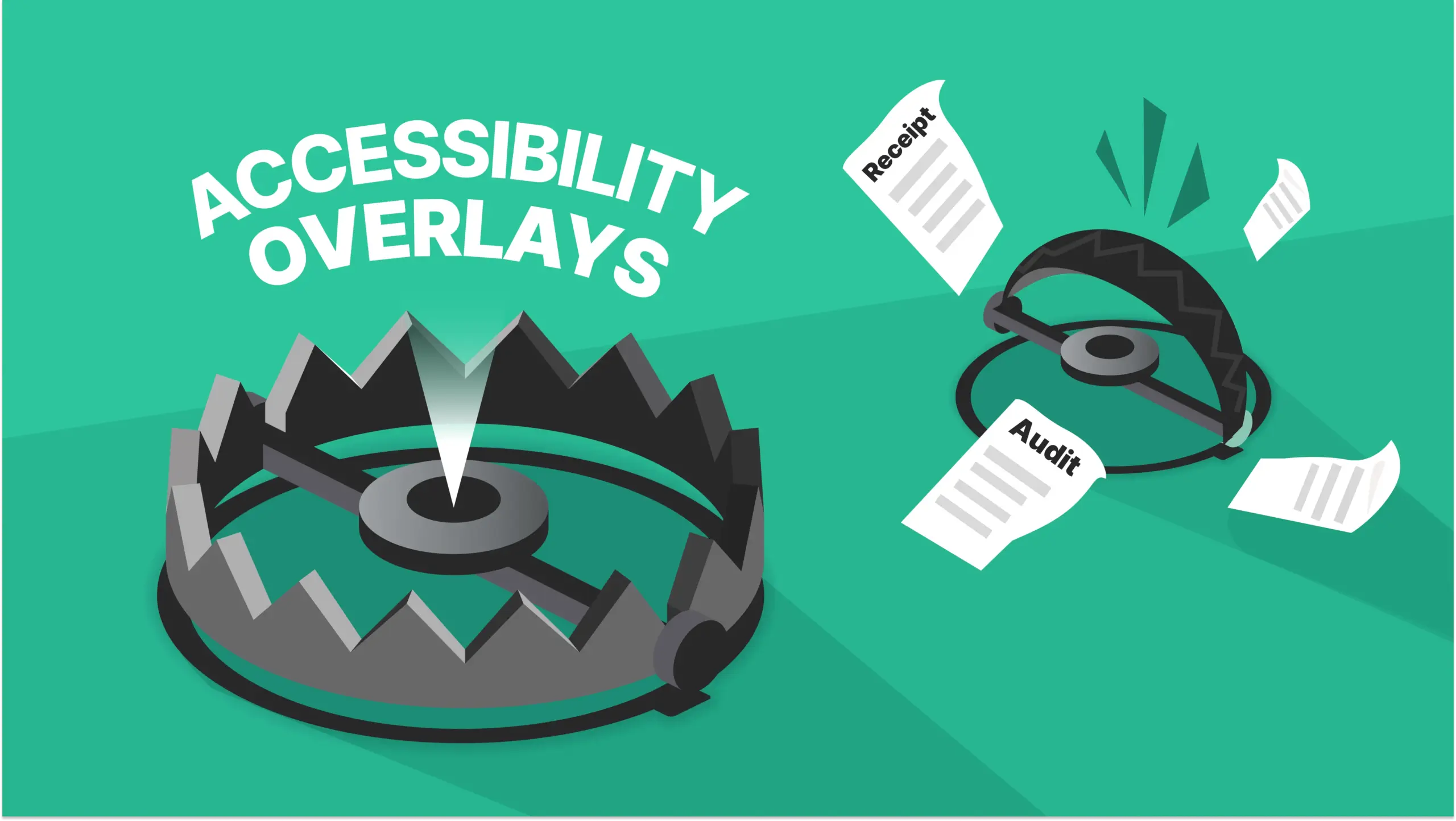
An overlay won’t do that for you. An AI tool that claims to fix everything won’t do that for you.
Documentation will. An ongoing program will. A real audit, a real plan, and evidence that you followed it will.
Because when the question becomes:
“Does this site need court intervention?”
The best answer you can give is:
“No. We’re already doing the work.”